
Guides
How to Light a Cigar: Key Steps

Jun
Learning how to light a cigar the right way can make a bigger difference than many people think. A properly lit cigar burns more evenly, tastes better, and gives you a much smoother smoke experience from start to finish. Even the best cigars can taste harsh if the lighting process is rushed.
If you’re new to lighting cigars or simply want a better way to light a cigar, don’t worry. It doesn’t take years to become a cigar aficionado. A few simple habits can help you learn how to properly light a cigar like a pro and enjoy every first puff. If you’re looking for premium cigars and quality accessories, Discount Smokes offers plenty of options for the best cigar brands to get you started.
How to Light a Cigar: Flame Based Methods
There is more than one way to light a cigar, but not every method gives the same results. The best way to light depends on what you have with you and how much time you want to spend. No matter which method you choose, always cut your cigar with a cigar cutter before you light your cigar. Once you’ve cut the end of the cigar, you’re ready to begin.
a) Cedar Spill
A cedar spill is a thin strip of untreated cedar wood that you light first before touching the flame to the cigar. Many cigar aficionados enjoy this method because it produces a gentle flame that helps preserve the essence of your cigar.
To use one, light the cedar spill, let it catch, then hold the cigar just above the flame. Rotate the cigar to ensure the entire foot of the cigar warms evenly before taking your first puff. This slower lighting process helps the cigar burn evenly.
Pros
- Gentle flame with very little effect on flavor.
- Great for premium cigars.
- Helps create an even burn.
Cons
- Not always easy to find.
- Slower than other methods.
- Can be difficult to use outdoors.
b) Butane Lighter, Torch Lighter, or Jet Lighter
A butane lighter is one of the most popular choices for cigar smokers. Since butane burns clean, it won’t leave behind unwanted flavors. Whether you’re using a torch lighter, cigar lighter, or jet lighter, the goal is the same: toast the foot before you light the cigar.
Hold the cigar at a slight angle instead of placing it directly in the flame. Rotate the cigar while keeping the torch just below the foot of the cigar. Once the edges begin to glow, take a gentle puff while continuing to rotate. This helps the cigar burn evenly and reduces the chance of an uneven burn. Using a torch lighter is especially helpful on windy days because the flame stays steady.
Pros
- One of the best ways to light a cigar.
- Clean-burning butane protects the natural cigar smoke.
- Fast and reliable.
- Excellent for outdoor use.
Cons
- Needs to be refilled with butane.
- Torch flames can overheat the wrapper if held too close.
- Good torch lighters often cost more than basic lighters.
c) Using Matches
You can also light a cigar using matches, but there’s one important step that many beginners miss. If you’re using regular cigar matches or wooden matches to light one, let the sulfur burn away before bringing the flame near the cigar. This keeps the sulfur from affecting the smoke experience.
Once the match is burning cleanly, hold the cigar above the flame and slowly rotate the cigar to ensure every part of the cigar foot begins to glow. After the foot is evenly toasted, take a gentle first puff while continuing to rotate. It takes a little more patience, but it’s still a reliable way to light your cigar.
Pros
- Easy to carry almost anywhere.
- Inexpensive.
- Doesn’t require lighter fluid or butane refills.
Cons
- Can go out quickly.
- Not ideal in windy weather.
- You may need several matches for larger cigars.
Things to Avoid When You Light a Cigar
Even if you have the right cigar lighter, a few small mistakes can make your cigar burn poorly or affect the flavor. Taking an extra minute during the lighting process can make your cigar smoking experience much more enjoyable. Also, check out the best cigar flavors to pick one.
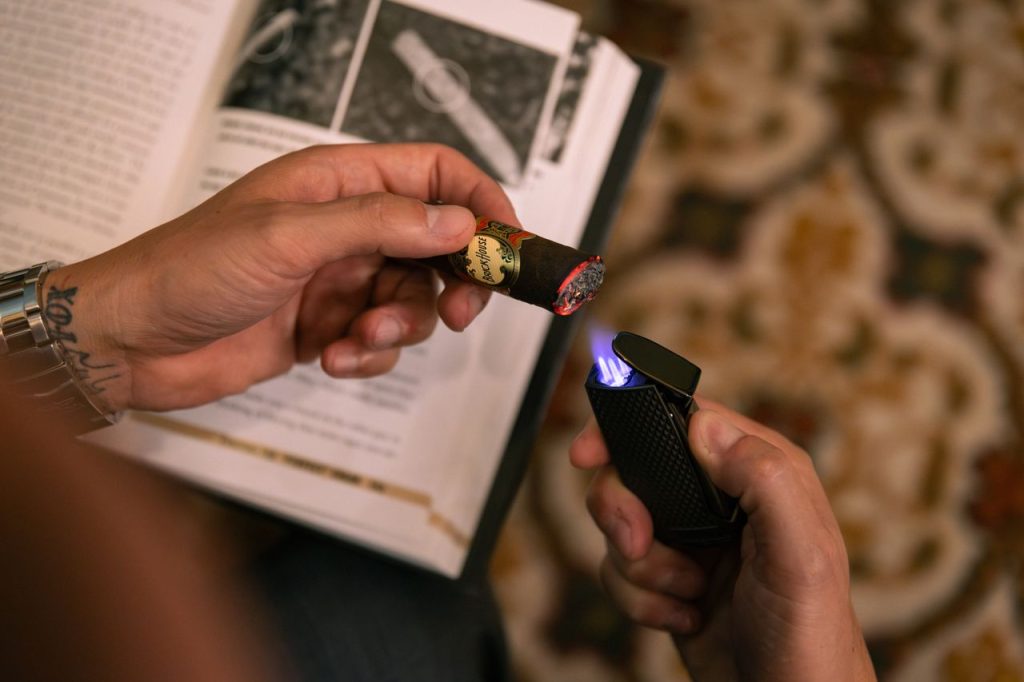
1. Lighting the Wrong End of the Cigar
It sounds obvious, but it happens more often than you might think. The closed end of the cigar is the end you place in your mouth after you cut your cigar with a cigar cutter. The open end is where you smoke through the cigar. The opposite end, known as the foot of the cigar, is the part you light.
Before you light the tobacco, make sure you’re holding the correct end of the cigar. Lighting the wrong end can ruin the wrapper and make the cigar impossible to enjoy.
2. Puffing While Lighting the Cigar in Your Mouth
A common mistake is putting the cigar in your mouth before it’s ready. Instead, hold the cigar in your hand and toast the foot first. Once the entire foot of the cigar starts to glow, you can take your first puff while continuing to rotate the cigar.
This simple step helps create a properly lit cigar with a more even burn. It also keeps the flame away from your face and gives you more control as you light your cigar.
3. Type of Flame
The type of flame you use matters more than many people realize. A butane lighter produces a clean flame that won’t affect the taste of the cigar. That’s why many cigar lovers consider it the best way to light premium cigars.
Avoid lighters that use lighter fluid. They can leave an aftertaste that covers the natural essence of your cigar. If you’re using cigar matches, remember to let the sulfur burn off before bringing the flame near the cigar. Whether you’re using a torch lighter, butane lighter, cedar spill, or cigar using matches, the goal is always the same: a clean flame for a better smoke experience.
How to Toast a Cigar
Before you fully light the cigar, it’s a good idea to toast a cigar first. Toasting simply means warming the foot of the cigar without letting the flame touch it directly.
Hold the cigar at a slight angle and place the flame just below the cigar foot. Rotate the cigar to ensure the entire foot of the cigar heats evenly. As the edges begin to glow, you’ll see the center of the cigar start to catch. Once the foot is evenly lit, take a gentle puff while slowly rotating again. This helps the cigar burn evenly from the start and reduces the chance of an uneven burn.
How to Relight a Cigar
If your cigar goes out, don’t rush to throw it away. In many cases, you can relight a cigar and continue enjoying it.
Start by gently tapping away the loose ash. If the end of a cigar has cooled completely, remove any loose tobacco before you light the cigar again. Then repeat the same lighting process you used the first time. Toast the foot, rotate the cigar, and take a few slow puffs until the cigar is ready.
If the cigar has been sitting for several hours or has developed a stale taste, it may be better to light a new one instead. A fresh cigar often provides a much better cigar experience than trying to save one that has been left too long.
Conclusion
Learning how to light a cigar isn’t difficult, but doing it the right way can completely change your best smoking experience. Whether you choose a cedar spill, a butane lighter, a torch lighter, or prefer using matches, taking your time helps the cigar burn evenly and lets you enjoy your cigar the way it was meant to be enjoyed.
As you gain experience, you’ll find the way to light your cigar that works best for you. With the right tools, a little patience, and these simple tips, you’ll learn how to properly light a cigar like a pro and enjoy every cigar from the first puff to the last.
